Sleep is one of the most important parts of a healthy lifestyle, but many people still ask the same question: how many hours of sleep do I need? The answer is not the same for everyone because sleep needs depend on age, lifestyle, and overall health.
Some people feel refreshed after 7 hours of sleep, while others need 8 or 9 hours. The real secret is not just the number of hours you sleep, but also the quality of your sleep.
In this complete guide, you will learn how many hours of sleep you need, recommended sleep hours by age, how sleep cycles work, and how to improve sleep quality naturally.
Why Sleep Is Important for Your Health
Sleep is not just resting. When you sleep, your body and brain do important work. Your body repairs muscles, your brain stores memories, and your immune system becomes stronger.
Here are some major benefits of getting enough sleep:
- Improves memory and learning
- Helps with weight control
- Boosts immune system
- Improves mood
- Reduces stress
- Improves heart health
- Gives you more energy
- Helps you focus better
People who don’t get enough sleep often feel tired, stressed, and unfocused during the day.
How Many Hours of Sleep Do I Need by Age
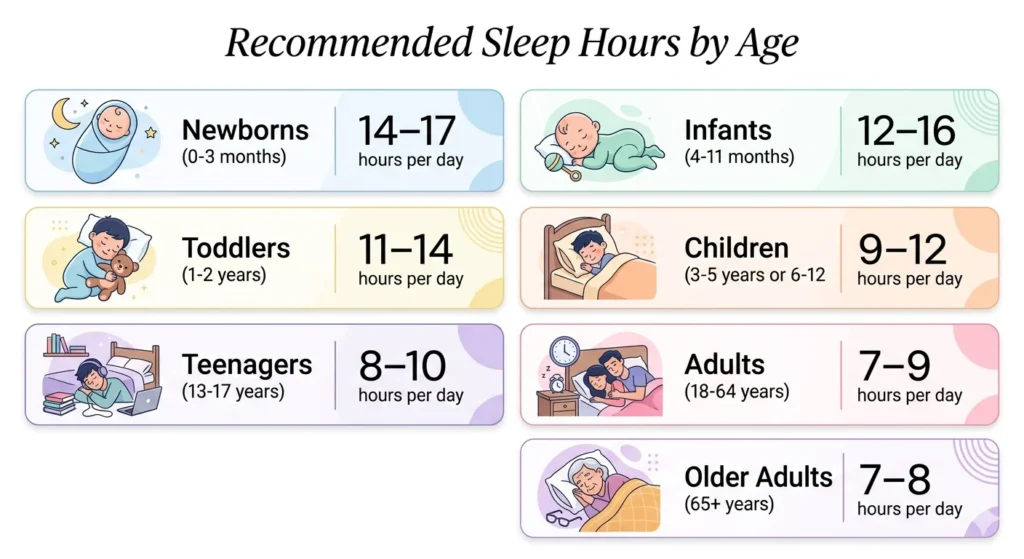
The number of hours you need depends mostly on your age. Below is the recommended sleep duration by age.
| Age Group | Sleep Duration |
|---|---|
| Newborns (0–3 months) | 14–17 hours |
| Infants (4–12 months) | 12–16 hours |
| Toddlers (1–2 years) | 11–14 hours |
| Preschool (3–5 years) | 10–13 hours |
| School Age (6–12 years) | 9–12 hours |
| Teenagers (13–18 years) | 8–10 hours |
| Adults (18–60 years) | 7–9 hours |
| Older Adults (60+) | 7–8 hours |
ost adults need 7 to 9 hours of sleep every night to stay healthy and active.
Understanding Sleep Cycles
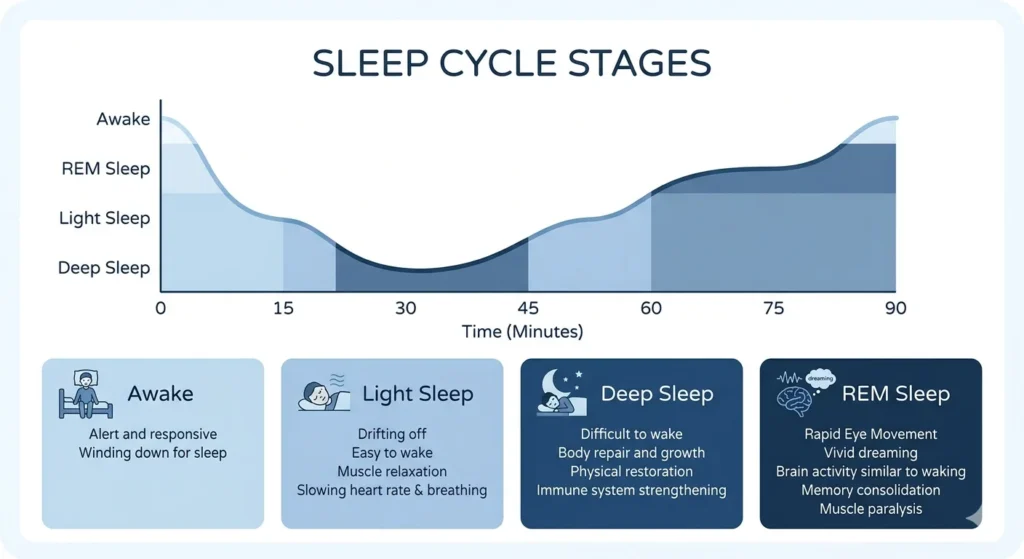
Sleep works in cycles. Each sleep cycle is about 90 minutes long. During the night, your body goes through multiple sleep cycles.
Each cycle has:
- Light sleep
- Deep sleep
- REM sleep (dream stage)
A good night’s sleep includes 4 to 6 sleep cycles. If you wake up in the middle of a sleep cycle, you will feel tired even if you slept many hours.
This is why sometimes 6 hours of sleep feels better than 7 hours — because sleep cycles matter.
Is 6 Hours of Sleep Enough?
Many people ask if 6 hours of sleep is enough. The answer is no — for most people, 6 hours is not enough for long-term health.
Sleeping only 6 hours for a long time can cause:
- Weight gain
- Weak immune system
- Stress and anxiety
- Memory problems
- Heart disease risk
- Low energy
You may survive on 6 hours of sleep, but you will not perform at your best.
Sleep Quality vs Sleep Quantity
Many people think sleeping more hours is enough, but sleep quality is just as important as sleep quantity.
If you sleep 8 hours but wake up many times during the night, your sleep quality is poor.
Here are ways to improve sleep quality:
- Sleep at the same time every day
- Stop using phone 1 hour before bed
- Avoid caffeine at night
- Keep your room dark and cool
- Exercise regularly
- Try meditation before sleep
- Avoid heavy meals before bedtime
Good sleep quality + enough sleep hours = healthy life.
Signs You Are Not Getting Enough Sleep
Your body gives warning signs when you don’t get enough sleep.
Common signs include:
- Feeling tired during the day
- Difficulty focusing
- Feeling sleepy while working
- Needing coffee to stay awake
- Bad mood or irritability
- Falling asleep quickly after lying down
If you feel these symptoms, you probably need more sleep.
Best Time to Sleep at Night
Sleep timing is also very important. Experts suggest that the best time to sleep is between 10 PM and 11 PM and wake up between 6 AM and 7 AM.
Sleeping late at night can disturb your sleep cycle and reduce sleep quality.
Simple Tips to Sleep Better Naturally
If you want deep and refreshing sleep, follow these simple tips:
- Go to bed at the same time every day
- Wake up at the same time every day
- Avoid mobile before sleep
- Drink warm milk before bed
- Keep your room quiet and dark
- Exercise 30 minutes daily
- Get sunlight in the morning
- Try deep breathing before sleep
These small habits can improve your sleep quality a lot.
How to Create a Healthy Bedtime Routine
Creating a bedtime routine can help you sleep faster and improve sleep quality. A good routine tells your brain that it is time to sleep.
Here is a simple bedtime routine you can follow:
- Stop using mobile 1 hour before bed
- Drink warm milk or herbal tea
- Dim the lights in your room
- Read a book for 10–15 minutes
- Do deep breathing or meditation
- Go to bed at the same time every night
- Wake up at the same time every morning
If you follow this routine daily, your sleep quality will improve and you will wake up feeling fresh and active.For more healty tips click hare
How Sleep Affects Weight Loss and Metabolism
Many people don’t know that sleep and weight loss are connected. If you don’t get enough sleep, your body produces more hunger hormones and fewer hormones that make you feel full. This can cause overeating and weight gain.
When you sleep less, your body feels tired, and you don’t have enough energy to exercise or stay active. Lack of sleep also slows down your metabolism, which means your body burns fewer calories.
Studies show that people who sleep 7–9 hours per night are more likely to maintain a healthy weight compared to people who sleep only 5–6 hours.
If you are trying to lose weight, sleep is just as important as diet and exercise. Good sleep helps your body recover, balance hormones, and burn fat more efficiently.
So, if you want to lose weight and stay healthy, make sure you get enough sleep every night.
Final Conclusion
So, how many hours of sleep do you need? The simple answer is 7 to 9 hours for adults, but sleep quality and sleep cycles are also very important.
The best way to know if you are getting enough sleep is this:
If you wake up feeling fresh, active, and focused, you are getting enough sleep.
Sleep is not a waste of time. Sleep is an investment in your health, brain, and future.
3. FAQ Section (Add at Bottom of Article)
FAQ – How Many Hours of Sleep Do I Need
Q1: How many hours of sleep do adults need?
Adults need 7 to 9 hours of sleep per night.
Q2: Is 7 hours of sleep enough?
Yes, 7 hours is enough for most adults, but some people may need 8 hours.
Q3: Is 6 hours of sleep enough?
No, 6 hours of sleep is not enough for long-term health.
Q4: What happens if you don’t get enough sleep?
You may feel tired, stressed, gain weight, and have weak immunity.
Q5: How can I improve my sleep quality?
Sleep at the same time daily, avoid phone before bed, and keep your room dark and cool.