Sleep and exercise are two of the most important pillars of a healthy lifestyle. Many people focus on fitness routines, workout performance, and physical activity but ignore sleep quality and recovery. However, scientific research shows a powerful connection between sleep and exercise, and both work together to improve physical health, mental health, athletic performance, and overall well-being.
Understanding the relationship between sleep and physical activity can help you improve sleep quality, boost workout performance, enhance muscle recovery, and maintain better energy levels throughout the day. In this article, we will explore how sleep affects exercise performance, how exercise improves sleep quality, and the best time to exercise for better sleep.

The Connection Between Sleep and Physical Activity
The connection between sleep and exercise is very strong. Physical activity and sleep quality influence each other in many ways. Regular exercise improves sleep quality, and good sleep improves physical performance, endurance, reaction time, and coordination.
When you engage in regular physical activity such as aerobic exercise, moderate exercise, or vigorous exercise, your body requires proper recovery. This recovery happens during deep sleep and REM sleep, where muscle repair, hormonal balance, and energy restoration take place.
Similarly, when you get enough sleep duration and maintain a consistent sleep routine, your body performs better during workouts. This is why athletes, fitness trainers, and health experts emphasize both exercise and sleep hygiene for optimal performance and recovery.
How Sleep Affects Exercise Performance
Sleep plays a major role in physical performance, workout recovery, and athletic performance. Without proper sleep, your body cannot recover properly, and your fitness performance may decrease.
1. Sleep and Muscle Recovery
Sleep is essential for muscle repair, muscle growth, and recovery after exercise. During deep sleep, the body releases growth hormone, which helps in muscle repair and recovery. This is why sleep and muscle recovery are closely connected.
If you do intense workouts, strength training, endurance training, or athletic training, you need quality sleep for recovery. Poor sleep can reduce muscle repair, increase inflammation, and slow down recovery.
2. Sleep and Energy Levels
Sleep helps restore energy levels. If you don’t get enough sleep, you may feel tired, have low stamina, and poor endurance during workouts. Sleep and energy levels are directly connected to physical performance and stamina.
3. Sleep and Reaction Time
Sleep improves reaction time, coordination, and cognitive performance. Athletes who get enough sleep perform better because their brain function and coordination improve.
4. Sleep and Injury Prevention
Poor sleep increases the risk of injury because sleep deprivation affects coordination, reaction speed, and physical recovery. Proper rest and recovery help in injury prevention and performance optimization.
How Exercise Improves Sleep Quality
Just like sleep improves performance, exercise improves sleep quality. People who engage in daily exercise or regular physical activity often experience better sleep patterns, deeper sleep cycles, and improved sleep duration.
1. Exercise and Circadian Rhythm
Exercise helps regulate the circadian rhythm, also known as the body clock. A healthy circadian rhythm improves sleep patterns, sleep consistency, and bedtime routine.
2. Exercise and Melatonin
Exercise increases melatonin production, which is the hormone responsible for sleep. Melatonin helps you fall asleep faster and improves sleep quality.
3. Exercise and Stress Reduction
Exercise reduces stress, anxiety, and depression by releasing endorphins. This helps in mood regulation and improves mental health, which leads to better sleep.
4. Exercise and Body Temperature
Exercise increases body temperature, and after exercise, the body temperature drops, which helps the body fall asleep faster and improves sleep quality.
Best Time to Exercise for Better Sleep
Many people ask: what is the best time to exercise for sleep? The answer depends on exercise intensity and individual sleep patterns.
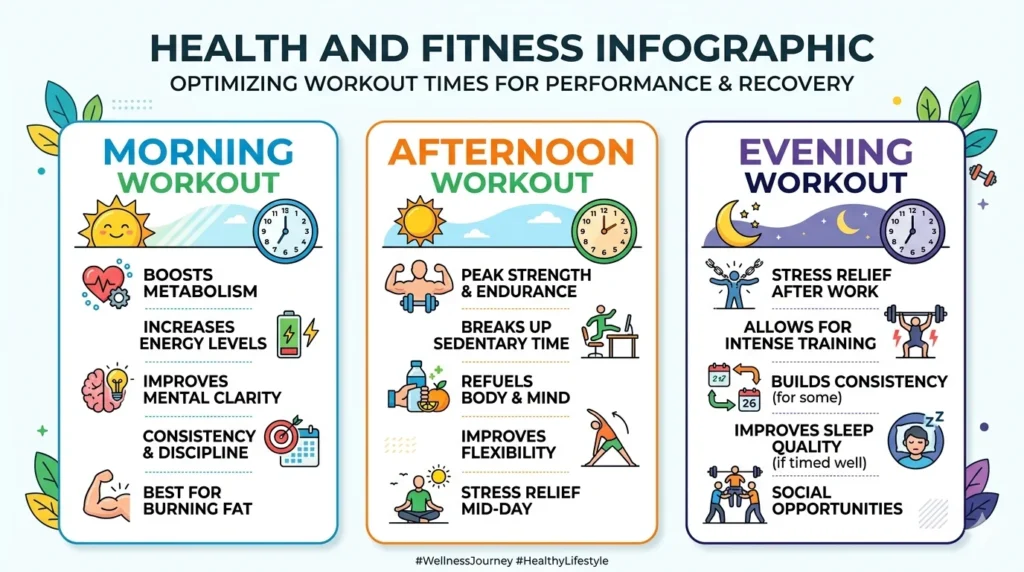
Morning Exercise
Morning workouts help regulate cortisol levels and improve energy levels throughout the day. Morning exercise is good for circadian rhythm and helps you sleep better at night.
Afternoon Exercise
Moderate exercise in the afternoon is considered one of the best times for workout performance, endurance, and sleep quality.
Evening Exercise
Evening workouts are fine if they are moderate exercise. However, vigorous exercise and intense workouts too close to bedtime may affect sleep because they increase adrenaline, body temperature, and alertness.
So, the best time to exercise for better sleep is usually morning or afternoon, while light exercise like stretching, yoga, or walking is good in the evening.
How Sleep Supports Recovery After Exercise
Recovery is one of the most important parts of fitness and training schedule. Sleep supports recovery after exercise in many ways:
- Muscle repair
- Tissue growth
- Hormonal balance
- Energy restoration
- Mental recovery
- Reduced inflammation
- Performance enhancement
- Endurance recovery
- Strength recovery
This is why sleep for recovery and performance is very important for athletes and active people.
Sleep, Brain Health, and Mental Health
Sleep and exercise both improve brain function, cognitive performance, and mental health.
Sleep helps remove toxins from the brain and improves memory, focus, and cognitive performance. Exercise increases blood flow to the brain and improves brain health.
Sleep and mood are also connected. Poor sleep can cause stress, anxiety, irritability, and depression, while exercise helps in stress reduction and mood regulation.
Exercise and sleep together create emotional balance, mental recovery, and overall well-being.
Sleep and Workout Recovery Science
Sleep and workout recovery science shows that people who sleep well experience:
- Better athletic performance
- Faster muscle recovery
- Better reaction speed
- Improved endurance
- Higher energy levels
- Better coordination
- Reduced injury risk
- Better performance optimization
This is why many athletes focus on sleep optimization and recovery through sleep.
How Much Sleep Do Active People Need?
Sleep needs depend on activity level, training intensity, and lifestyle. However, general recommendations are:
| Activity Level | Sleep Duration |
|---|---|
| Light exercise | 7 hours |
| Moderate exercise | 7–9 hours |
| Intense training | 8–10 hours |
| Athletes | 9–10 hours |
Athletes and people doing intense workouts need more sleep for muscle repair, endurance recovery, and performance enhancement.
Tips to Balance Sleep and Exercise
Here are some tips to improve sleep and fitness recovery:
- Maintain a consistent sleep routine
- Follow a proper training schedule
- Avoid vigorous exercise before bed
- Create a bedtime routine
- Improve sleep hygiene
- Do regular physical activity
- Manage stress with exercise
- Get enough sleep duration
- Focus on rest and recovery
- Balance fitness and sleep
Balancing fitness and recovery is important for a healthy lifestyle and wellness routine.
Healthy Lifestyle: Sleep and Exercise Together
A healthy lifestyle includes:
- Regular exercise
- Healthy sleep habits
- Balanced diet
- Stress management
- Recovery and rest
- Mental health care
- Physical health care
Sleep and exercise together improve overall health, vitality, and lifestyle improvement.
Frequently Asked Questions (FAQ)
Does exercise improve sleep?
Yes, regular exercise improves sleep quality, sleep duration, and helps you fall asleep faster.
Does sleep improve exercise performance?
Yes, sleep improves athletic performance, reaction time, endurance, and muscle recovery.
What is the best time to exercise for sleep?
Morning or afternoon exercise is best for sleep, while intense workouts before bed may affect sleep.
Can exercise help with insomnia?
Yes, physical activity and sleep are connected, and regular exercise can help reduce insomnia and improve sleep patterns.
Can lack of sleep affect workout performance?
Yes, sleep deprivation reduces energy levels, endurance, reaction time, and workout performance.
Why is sleep important after exercise?
Sleep helps in muscle repair, recovery, hormonal balance, and energy restoration.
Morning vs evening exercise for sleep – which is better?
Morning exercise is best for circadian rhythm, but moderate evening exercise is also fine if it is not too intense.
Conclusion
The relationship between sleep and exercise is one of the most important factors in maintaining physical health, mental health, and overall well-being. Sleep improves exercise performance, muscle recovery, and athletic performance, while exercise improves sleep quality, sleep duration, and sleep patterns.
If you want better fitness results, better recovery, improved mental health, and a healthy lifestyle, you must focus on both sleep and physical activity. Sleep and fitness together create the perfect balance for performance optimization, recovery, and long-term health.
By improving sleep hygiene, maintaining a consistent sleep routine, doing regular exercise, and focusing on recovery, you can improve your energy levels, endurance, stamina, mood, brain function, and overall health.
Sleep and exercise are not separate — they are deeply connected, and together they create a strong foundation for a healthy, active, and balanced life