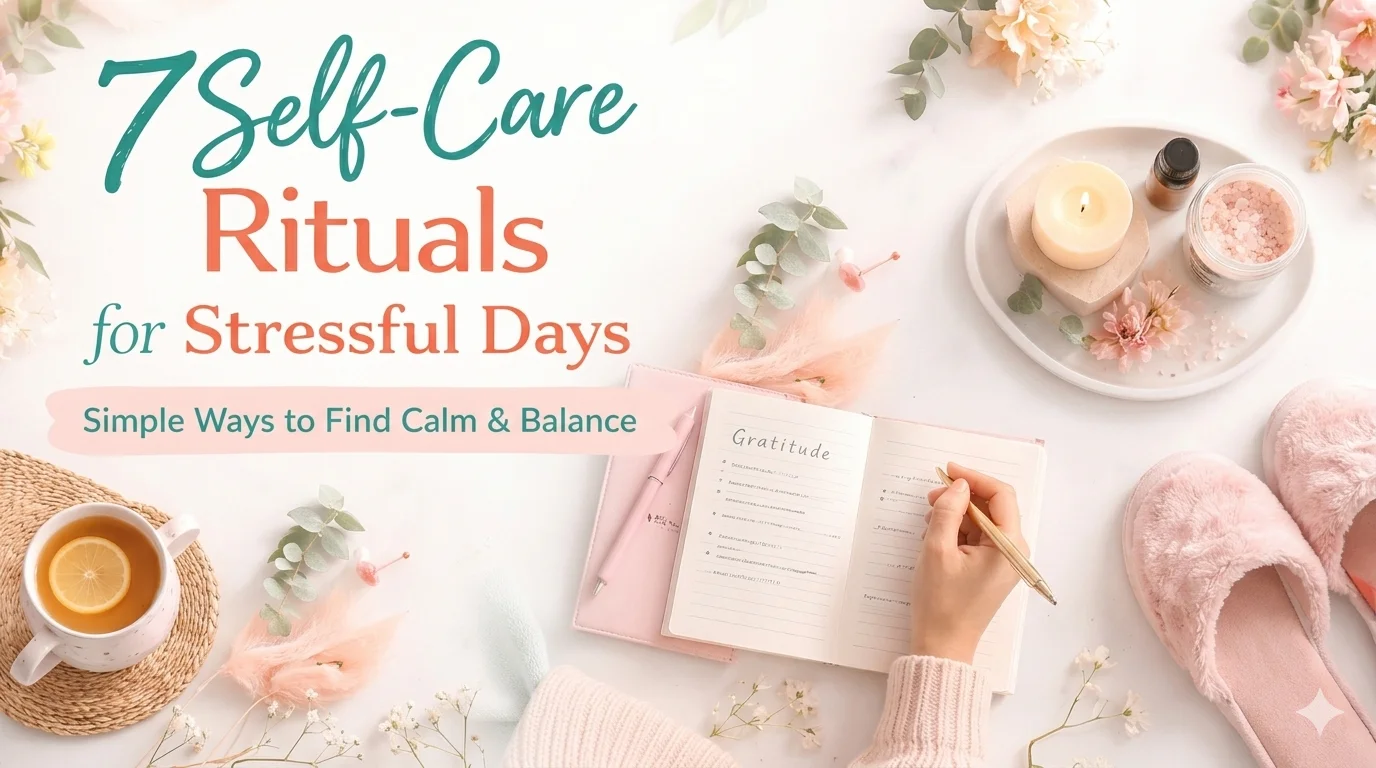
Some days feel overwhelming before they even begin.
You wake up already thinking about deadlines, responsibilities, and the endless list of things you need to do. By midday, your mind feels crowded with worries, your body feels tense, and it seems impossible to find a moment of peace.
Modern life moves fast, and stress has quietly become part of many people’s daily routine. But constantly pushing through stress without caring for yourself can slowly drain your energy and affect your mental health.
The good news is that you don’t need complicated routines or expensive wellness programs to feel better. Small, intentional habits can make a powerful difference.
Practicing simple self care rituals for stressful days allows you to pause, reset your mind, and restore emotional balance. These small moments of care can improve your mood, reduce anxiety, and help you move through the day with more clarity.
In this guide, you’ll discover seven simple self-care practices that can help you relax, recharge, and create a healthier daily self care routine.
What Are Self-Care Rituals for Stressful Days?
Self-care rituals for stressful days are simple habits that help calm the mind, relax the body, and restore emotional balance. These rituals can include activities like mindful breathing, journaling, spending time in nature, gentle exercise, or taking breaks from digital distractions.
Even small self-care habits can become powerful ways to reduce stress naturally when practiced consistently.
Pause and Reset Your Mind with Mindful Breathing
When stress begins to build, one of the most effective ways to calm your body is through mindful breathing.
Many people don’t realize how closely breathing is connected to stress. When we feel anxious, our breathing becomes shallow and quick. Slowing down the breath signals the nervous system to relax.
Try this simple breathing exercise:
- Sit comfortably and close your eyes.
- Take a slow breath in through your nose.
- Hold for a few seconds.
- Slowly exhale through your mouth.
Focus only on your breathing. If your mind wanders, gently bring your attention back to the rhythm of your breath.
Even five minutes of mindful breathing can significantly reduce anxiety. This practice is one of the simplest forms of mindfulness for stress relief, and it can be done anywhere—at home, at work, or even during a busy day.
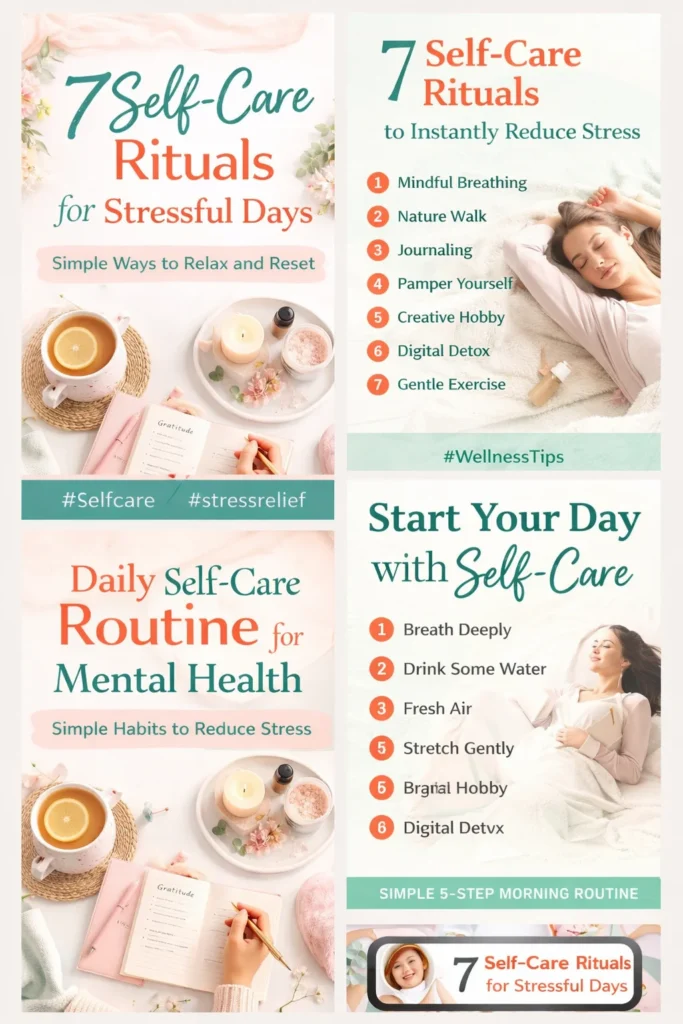
Step Outside and Let Nature Calm Your Mind
Nature has a powerful calming effect that many people underestimate.
When you spend most of your day indoors looking at screens, your mind can easily become overwhelmed. Stepping outside, even briefly, helps reset your mental state.
Take a short walk outside and notice the small details around you:
- the sound of birds
- the movement of leaves
- the warmth of sunlight
- the fresh air
These simple sensory experiences help ground your mind in the present moment.
Studies show that spending time outdoors lowers stress hormones and improves mood. Even ten minutes outside can help you feel more relaxed and refreshed.
If you’re searching for stress relief tips that actually work, reconnecting with nature is one of the most effective.
Write It Out: The Healing Power of Journaling
Sometimes stress builds up simply because we keep too many thoughts inside our minds.
Journaling offers a healthy way to release those thoughts.
Grab a notebook and write whatever comes to mind. You might write about your worries, your feelings, or events from your day. There are no rules—just allow yourself to express your thoughts freely.
Writing things down can help you:
- process emotions
- understand your thoughts
- reduce mental overload
Many people also like to end their journaling session with a gratitude list.
Write down three things you’re thankful for, even if they are small moments like enjoying your favorite drink or having a supportive conversation.
This simple habit can become one of the most powerful self care habits for mental health.
Create Your Personal Relaxation Ritual
Sometimes the best thing you can do during a stressful day is simply slow down and treat yourself with kindness.
Self-care doesn’t have to be complicated. It can be something as simple as creating a peaceful moment for yourself.
You might:
- take a warm bath
- light a candle
- enjoy a calming cup of tea
- listen to relaxing music
- apply a face mask
These small rituals create a sense of comfort and relaxation.
When you intentionally create peaceful moments in your day, you send a message to your mind and body that rest is important.
These small moments of calm are some of the most enjoyable relaxing self care ideas you can practice.
Express Yourself Through Creativity
Creative activities are a powerful way to release stress and reconnect with yourself.
When you engage in creative work, your mind shifts away from worries and focuses on the act of creating.
Creative expression can include:
- drawing
- painting
- writing stories
- playing music
- cooking
- crafting
You don’t need to be perfect or talented. The purpose is simply to enjoy the experience.
Creative activities often place you in a “flow state,” where you become fully immersed in the activity. During this time, your mind relaxes and stress naturally fades.
For many people, creativity becomes an important part of their daily self care routine.
Unplug and Give Your Brain a Break
Technology connects us to the world, but it can also quietly increase stress.
Constant notifications, social media scrolling, and endless information overload the brain.
Taking a short digital detox can be incredibly refreshing.
Choose a period of time where you disconnect from screens. Put your phone away and focus on something offline.
You could:
- read a book
- go for a walk
- talk with a friend
- spend time with family
Without constant digital stimulation, your mind has space to rest and recover.
This is one of the easiest ways to reduce stress naturally in today’s digital world.
Move Your Body to Release Built-Up Stress
Physical movement is one of the fastest ways to release stress from the body.
When we feel overwhelmed, our muscles often become tense. Movement helps release that tension and improves circulation.
You don’t need a long workout to feel the benefits.
Try simple activities like:
- stretching
- yoga
- walking
- light exercise
Exercise also releases endorphins, which are natural chemicals that improve mood and reduce anxiety.
Even 15 minutes of movement can help reset your mind and restore your energy.
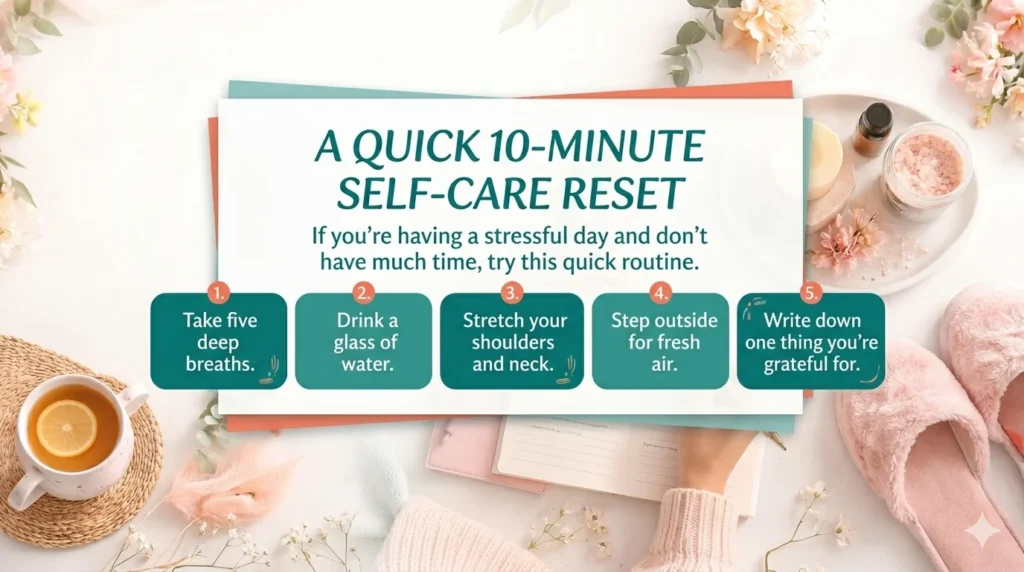
A Quick 10-Minute Self-Care Reset
If you’re having a stressful day and don’t have much time, try this quick routine.
- Take five deep breaths.
- Drink a glass of water.
- Stretch your shoulders and neck.
- Step outside for fresh air.
- Write down one thing you’re grateful for.
These small steps can quickly improve your mood and restore focus.
Common Self-Care Mistakes People Make
Many people struggle with self-care because they misunderstand what it really means.
Some common mistakes include:
• waiting until burnout before practicing self-care
• believing self-care requires lots of time
• thinking self-care is selfish
• spending too much time on digital distractions
In reality, the most effective self-care habits are simple and consistent.
Small daily actions often have the biggest impact.
Final Thoughts: Small Habits Create Powerful Change
Life will always include stressful moments. Deadlines, responsibilities, and unexpected challenges are part of the human experience.
But how you respond to those moments can make a powerful difference.
By practicing simple self care rituals for stressful days, you create small pockets of calm within a busy life. These moments allow you to recharge, refocus, and protect your mental well-being.
Self-care doesn’t require perfection. It simply requires intention.
Sometimes the most powerful transformation begins with the smallest habit.
Frequently Asked Questions
How can I reduce stress quickly?
You can reduce stress quickly by practicing deep breathing, taking a short walk, stretching your body, or writing your thoughts in a journal.
How often should I practice self-care?
Self-care can be practiced daily. Even 10 to 15 minutes per day can improve mental and emotional well-being.
What are the easiest self-care habits to start with?
Simple habits like mindful breathing, drinking water, spending time outdoors, and taking short breaks from screens are easy ways to start.